


Last Beacon: Survival
4.3519.00 Reviews
App Specs
- Version
- 1.5.2
- Updated On
- License
- Free
- Downloads
- 1,000,000+
- Developer
- YG Technology FZ-LLC
- Categories
- Strategy
- Platform
- Android
Screenshots
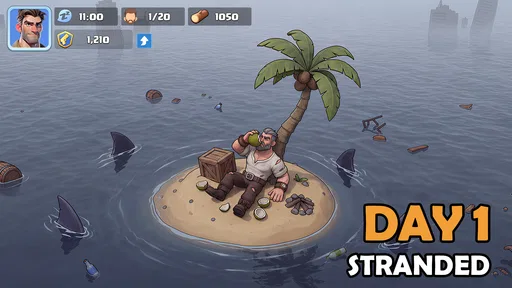
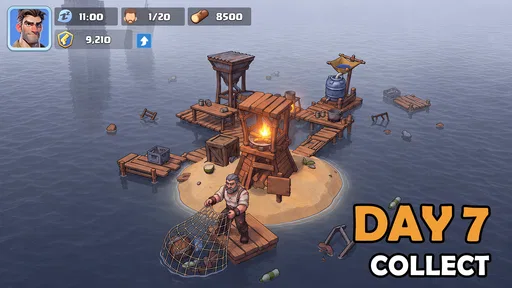
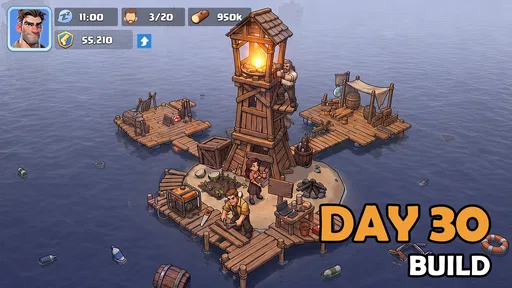
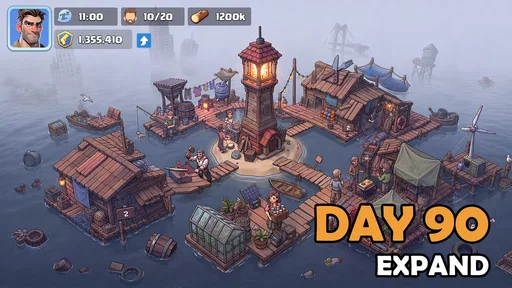
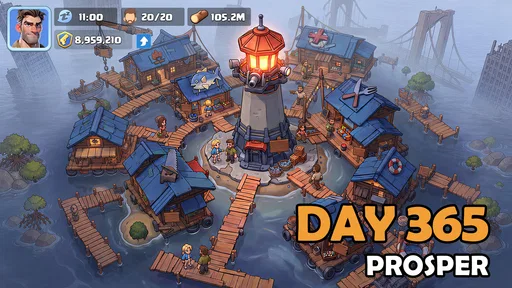
 Analysis by AppCompare
I’d approach Last Beacon: Survival as a strategy game for people who like the idea of building a foothold in a world where the ocean has taken over. Its premise gives the genre a distinctive setting: instead of expanding across familiar land, you’re trying to make a settlement work on the water and help humanity recover. That’s an appealing hook, but it also sets a useful expectation. This is best considered when you want a survival-themed strategy experience, not when you’re looking for a quick, self-contained action game.
My main decision question is whether you enjoy balancing a settlement’s immediate needs against its longer-term security. A game about surviving at sea sounds dramatic, but the lasting appeal of this kind of strategy depends on whether you like planning, prioritizing, and adjusting when your first choices don’t go smoothly. If those decisions are satisfying to you, the ocean setting gives them a clear purpose. If you prefer a tightly scripted story or direct combat above all else, the concept alone may not be enough.
What the ocean setting changes
I find the ocean setting useful as more than a visual backdrop: it frames the whole appeal around making a settlement endure, rather than simply expanding for its own sake. That can make small planning choices feel connected to a larger goal, though it may not suit someone who wants a relaxed sandbox. Next, I’d weigh whether that survival-first identity is the kind of strategy challenge I want to return to.
A strategy game with a clear survival premise
Last Beacon sits in the strategy category, and its central idea gives that label more context than a generic base-building pitch. The settlement is tied to a world shaped by water, so the fantasy is not simply to grow a town; it is to establish a place where people can endure and rebuild. I find that framing more compelling than a setting that treats expansion as its only goal. Survival gives progress a reason, while rebuilding adds a longer horizon to the premise.
That theme is also a useful filter for deciding whether to try it. I’d recommend it to someone who enjoys imagining how a vulnerable community can become more stable, and who is comfortable taking time to work toward that transformation. It is less likely to suit someone who wants every session to deliver a big dramatic payoff. The strongest appeal here is the broader challenge suggested by the setting, rather than a promise of constant spectacle.
YG Technology FZ-LLC developed the game, which is free to download. Its current version is 1.5.2, and it requires Android 6.0 or later. The audience rating is Everyone 10+, a useful detail for families considering whether the game is appropriate, though parents should still make their own decision based on the child and the way in-app purchases are handled on the device.
Who is likely to enjoy making progress
I’d put this on the shortlist for players who like strategy games with a survival theme, especially those who prefer a sense of place over a neutral map. The ocean premise can make the goal of creating a safe, functioning home feel more vivid. It may also appeal to people who enjoy thinking in stages: what needs attention now, what can wait, and which improvements will make the settlement more resilient later.
Worth Reading Before You Choose

Flipboard Shows What News Apps Must Do Beyond the Feed

Switching to Android Auto Means Rethinking Your Driving Routine

Google Calendar Makes a Crowded Week Easier to Manage

Ludo King Makes the Most of the Minutes Between Plans

Baby Panda World Brings Quick Play to Modern Phones, but Its Game Library Feels Busy

ESPN’s Live Game View Makes Following Close Games Easier
A realistic everyday use case is a short break when you want to check in on a developing strategy game and think through your next priorities, rather than start a long competitive match. That kind of play suits the survival-building concept, provided you enjoy returning to an ongoing project. If you only have patience for games that resolve cleanly in one sitting, a compact puzzle or turn-based game may be a better fit.
One practical tip is to decide before opening the game what you want from that session: a little progress, a closer look at the settlement, or a deliberate change in your longer-term plan. Strategy games can feel unfocused when every available task seems equally urgent. Treating each visit as a small planning window helps you judge whether the game’s pace suits you, without expecting every session to end with a major breakthrough.
What to compare before choosing it
Compared with the usual alternatives in the strategy category, Last Beacon’s strongest point is its survival-on-the-ocean identity. A conventional city builder may be a better choice if you primarily want to shape a settlement without the added pressure implied by survival. A combat-focused strategy game may suit you more if the appeal is tactical confrontation above all else. Last Beacon is most persuasive when you want rebuilding and endurance to be part of the same fantasy.
That distinction matters because a memorable setting does not automatically make a game the right strategy choice. I would look at the core experience you want before installing: do you want to nurture a fragile community, compete against opponents, or solve tightly bounded tactical problems? The ocean setting gives this game a strong thematic lane, but players looking for a different kind of decision-making should not choose it just because its premise sounds dramatic.
There’s also a trade-off in choosing any game built around an ongoing survival scenario: the theme can create a sense of urgency, but that urgency may not be relaxing for everyone. If you like weighing risks, it can make progress more engaging. If you prefer a low-pressure creative sandbox, a city-building alternative with a gentler focus may be more comfortable. I’d make that distinction before committing time, rather than assuming all settlement games feel alike.
How to judge its value and commitment
The game is free to start, while in-app purchases range from $0.99 to $299.99 per item. That wide range makes it sensible to begin without treating purchases as part of the basic experience. I’d first see whether the core loop and pace hold my attention; only then would I consider spending anything. A purchase should solve a specific annoyance or support enjoyment I already have, not be an automatic response to the game presenting a tempting option.
For families, the Everyone 10+ rating is a starting point rather than a complete buying guide. The purchase range is worth discussing if a child will play, and device-level purchase controls can help avoid accidental spending. For an adult player, the same advice applies in a simpler form: decide on a personal limit in advance. Free entry is convenient, but it does not mean every later purchase will feel worthwhile to every player.
The game has an average rating of 4.3 from around 13,000 ratings, and it has been installed over a million times. Those figures suggest that many players have given it a try, but they can’t tell you whether its particular mix of strategy and ocean survival matches your taste. I’d use them as context, not as a substitute for asking whether you enjoy gradual settlement planning and a world built around endurance.
Its release date is May 11, 2026. If you are comparing it with an established strategy game you already know, the more useful question is not which one has the broader reputation, but which one you’ll actually want to return to. Last Beacon’s hook is specific enough to make that comparison personal: choose it when the prospect of rebuilding on the ocean is part of the draw, and choose another game when you want a different setting or a more clearly defined competitive focus.
What changing games would mean
Switching away from a strategy game is not usually difficult in a technical sense, but it can mean abandoning a project you have begun to care about. That emotional investment is one reason I would test the fit early. Pay attention to whether you enjoy the decisions themselves, not just the promise of a thriving settlement later. If the planning feels like a chore from the outset, the theme may not be enough to keep you engaged.
By contrast, if you find yourself thinking between sessions about how to make your next move, that is a better sign than simply liking the premise. Try to notice which parts draw you in: the ocean survival idea, the act of building, or the broader goal of helping civilization recover. Knowing that helps you decide whether to continue with this game or move to a more specialized builder or tactics game. It also gives you a clearer reason to spend time or money, rather than drifting into either by habit.
One non-obvious trade-off is that a strong setting can make you more patient with a game’s slower stretches, but it can also raise expectations. If you want the feeling of a society rebuilding from disaster, you may be willing to accept incremental progress. If you expect every moment to match the scale of that premise, you may find the ordinary work of strategy less exciting. I’d approach it with interest in the process, not just the imagined end state.
My recommendation
I’d recommend Last Beacon to players who want a strategy game anchored by survival, settlement-building, and the unusual image of rebuilding humanity on the ocean. Its free entry makes it reasonable to test whether that combination works for you, and its Everyone 10+ rating gives families a clear age guide to consider. I would not recommend it solely on the strength of its premise to someone who dislikes gradual planning, or to someone who really wants a focused combat game or a pressure-free creative builder.
Overall, the key decision is whether the ocean setting changes the kind of strategy you want to play. For me, it gives the game a memorable identity and a clear reason to care about the settlement, while the purchase options make a cautious, no-pressure start the sensible approach. Give it a try if you like thinking through survival and rebuilding; skip it if those themes sound more like work than fun. That is the most useful test of whether this particular strategy game belongs on your device.
Pros
- A focused survival loop makes gathering and crafting easy to understand.
- Scavenging gives each expedition a clear sense of risk and reward.
- Base-building adds a satisfying long-term goal to survival tasks.
- Exploration encourages players to search beyond their starting area.
- Its post-apocalyptic setting gives the world a distinct atmosphere.
Cons
- Survival routines can feel repetitive after the initial challenge.
- Progress may slow when essential resources are difficult to find.
- Combat can be unforgiving for players who prefer a relaxed pace.
- Frequent resource management may interrupt exploration.
- Limited guidance can leave some objectives unclear to newcomers.
FAQs for Last Beacon: Survival
What is Last Beacon: Survival about?
Last Beacon: Survival is a survival-themed game built around enduring danger and making progress in a hostile setting. Players can expect to manage their character’s needs, explore the world, and make choices about how to use available resources. The exact activities and story details may vary with updates, so check the current store listing and in-game description to confirm what is included in the version available for your device.
Is Last Beacon: Survival free to download and play?
The game may be available to download without an upfront purchase, but that does not necessarily mean every feature is free. Some versions of survival games offer optional in-app purchases, such as items, currency, or progression aids, and availability can differ by platform or region. Review the app store’s price and purchase disclosures before installing, and check whether spending controls are appropriate if children will be playing.
Can I play Last Beacon: Survival offline?
Offline access depends on how the game handles account sign-in, saving, and online features. Some survival games let players continue certain activities without a connection but require internet access for initial setup, updates, cloud saves, or multiplayer features. Check the current store listing and try the game’s own connection guidance before relying on it for travel or other situations where Wi-Fi or mobile data may be unavailable.
Which devices support Last Beacon: Survival?
Compatibility depends on the game’s current requirements and the operating system installed on your phone or tablet. Before downloading, check the official Google Play or Apple App Store page for supported operating-system versions, device requirements, storage needs, and regional availability. A device that technically meets the minimum requirements may still experience slower performance, so installing available system updates and keeping extra storage space free can help.
Does Last Beacon: Survival include multiplayer or social features?
Whether you can play with other people depends on the version and features currently offered by the game. Look at its store description and in-game menus for information about multiplayer, online events, chat, or account features; these may require an internet connection and could change after updates. If social interaction matters to you, also review privacy settings and any available parental controls before creating an account or connecting with other players.


